

If you’re wondering how much does Europe trip cost from India, the short answer is that a Europe trip can cost anywhere between ₹1.2 lakh and ₹3 lakh per person, depending on the countries you visit, your travel style, the season, and how early you book your flights and hotels.
I completely understand this question because I had the same concern before planning my own Europe trip.
Back in 2018, I travelled from Delhi to Switzerland, and at that time, the overall Europe trip cost from India was noticeably lower than it is today. The Euro exchange rate was more favourable, flight fares were comparatively cheaper, and I managed to keep my accommodation costs low by staying in a hostel instead of a hotel.
During my trip, I explored Geneva, Lucerne, and even visited Jungfraujoch (Top of Europe)—one of the highest railway stations in Europe. The crystal-clear lakes, snow-covered mountains, and incredibly efficient public transport made Switzerland one of the most beautiful countries I’ve ever visited. Although Switzerland is considered one of Europe’s most expensive destinations, careful planning helped me stay within my budget.
Today, however, things have changed. Flight prices, hotel rates, and the value of the Euro have all increased, making it even more important to estimate your travel budget before booking your trip.
How These Europe Trip Costs Were Calculated
Cost methodology: The estimates in this guide are planning ranges for Indian travellers based on economy return flights from major Indian cities, Schengen visa and insurance costs, accommodation, food, public transport, intercity travel and common sightseeing expenses. Mid-range hotel estimates assume that two travellers may share a room, while shopping and personal luxury purchases are excluded unless mentioned separately.
Last cost check: September 8, 2026. Actual prices can change with exchange rates, travel dates, destination, hotel availability and how early you book.
How Much Does Europe Trip Cost from India?
The average Europe travel budget for Indian travellers ranges from ₹1.2 lakh to ₹3 lakh per person. Your final budget depends on several factors, including:
- Number of countries you plan to visit
- Trip duration
- Travel season
- Type of accommodation
- Flight booking date
- Daily spending habits
- Sightseeing preferences
Europe Trip Cost from India at a Glance
The table below gives you a realistic estimate of the major expenses involved in planning a Europe trip from India. For most first-time travellers from India, a 7–10 day Europe trip is the easiest budget to plan, because flights and visa costs remain relatively fixed while accommodation and daily expenses increase with every additional day. A realistic trip can start near ₹1.2 lakh for careful budget travel, while a comfortable multi-country holiday usually requires a larger buffer.
| Expense Category | Budget Traveller | Mid-Range Traveller | Luxury Traveller |
| Ideal Duration | 7–10 Days | 10–14 Days | 14–18+ Days |
| International Flights | ₹45,000–₹55,000 | ₹55,000–₹85,000 | ₹85,000–₹1,40,000+ |
| Schengen Visa & Insurance | ₹13,000–₹15,000 | ₹13,000–₹15,000 | ₹15,000–₹20,000+ |
| Accommodation | ₹1,500–₹2,500/night | ₹6,000–₹12,000/night | ₹20,000–₹45,000+/night |
| Food & Drinks | ₹1,500–₹2,500/day | ₹3,000–₹6,000/day | ₹12,000+/day |
| Internal Transport | ₹500–₹1,500/day | ₹15,000–₹25,000 | ₹40,000+ |
| Sightseeing | ₹5,000–₹10,000 | ₹15,000–₹30,000 | ₹60,000+ |
| Hidden Cost | ₹4,000 | ₹7,000 | ₹15,000+ |
| Estimated Total Cost | ₹1.2L–₹1.5L | ₹2L–₹3L | ₹4.5L–₹7L+ |
Quick Tip: If you’re planning your first Europe vacation from India, a 10-day mid-range trip covering 2–3 countries offers the best balance between budget and experience.
My recommendation: If this is your first Europe trip, don’t choose countries only by popularity. Your route can affect the final budget almost as much as your hotel category.
How Your Europe Route Changes the Total Cost
Two travellers can spend the same number of days in Europe and still have very different budgets simply because they choose different destinations. Accommodation, food, transportation and attraction prices vary significantly between European cities.
For example: a 10-day trip covering Budapest, Prague and Kraków can cost considerably less than spending the same 10 days across Paris, Switzerland and Venice. Prague’s typical traveller spending is substantially lower than Paris, while Switzerland is among the more expensive European destinations. Current traveller-spending data also shows large differences between cities such as Budapest, Amsterdam, Paris and Venice.
| Example 10-Day Route | Cost Level | Estimated Budget Per Person | Best For |
|---|---|---|---|
| Budapest + Prague + Kraków | Budget-Friendly | ₹1.3–₹1.7 lakh | Backpackers, students & budget travellers |
| Prague + Vienna + Budapest | Budget to Mid-Range | ₹1.5–₹2 lakh | First-time visitors & couples |
| Rome + Florence + Venice | Mid-Range | ₹1.7–₹2.4 lakh | Food, history & culture |
| Paris + Amsterdam + Rome | Mid to High | ₹2–₹2.8 lakh | Classic first Europe trip |
| Paris + Switzerland + Venice | High | ₹2.3–₹3.3 lakh | Scenic trips & couples |
| Switzerland + Norway/Iceland | Very High | ₹2.8–₹4 lakh+ | Nature-focused & premium trips |
Budget strategy: If Switzerland is on your bucket list, you don’t need to remove it. Spend fewer nights there and combine it with relatively more affordable destinations such as Prague, Budapest or Kraków. This usually works better than cutting every meal or attraction just to stay within budget.
7 Days Europe Trip Cost from India
7 day Europe trip is ideal for first-time travellers who want to explore 1–2 countries without rushing. It offers enough time to visit major attractions while keeping your overall budget under control. If you book your flights and accommodation in advance, a one-week Europe vacation can be an affordable option for Indian travellers.
| Expense | Budget | Mid-Range | Luxury |
|---|---|---|---|
| Return Flights | ₹45,000–₹65,000 (€450–€650) | ₹60,000–₹85,000 (€600–€850) | ₹1,00,000+ (€1,000+) |
| Schengen Visa & Insurance | ₹10,000–₹15,000 (€100–€150) | ₹10,000–₹15,000 (€100–€150) | ₹10,000–₹15,000 (€100–€150) |
| Accommodation | ₹18,000–₹30,000 (€180–€300) | ₹35,000–₹60,000 (€350–€600) | ₹90,000+ (€900+) |
| Food | ₹10,000–₹18,000 (€100–€180) | ₹20,000–₹35,000 (€200–€350) | ₹50,000+ (€500+) |
| Transport | ₹8,000–₹15,000 (€80–€150) | ₹15,000–₹25,000 (€150–€250) | ₹40,000+ (€400+) |
| Sightseeing | ₹8,000–₹15,000 (€80–€150) | ₹20,000–₹35,000 (€200–€350) | ₹50,000+ (€500+) |
| Estimated Total | ₹95,000–₹1.5 lakh | ₹1.6–₹2.5 lakh | ₹3.5 lakh+ |
10 Days Europe Trip Cost from India
10 day Europe trip is one of the most popular choices for Indian travellers because it provides enough time to explore 2–3 countries comfortably. It offers a good balance between sightseeing, travel time, and budget, making it suitable for couples, families, and first-time visitors.
| Expense | Budget | Mid-Range | Luxury |
|---|---|---|---|
| Return Flights | ₹45,000–₹65,000 (€450–€650) | ₹60,000–₹85,000 (€600–€850) | ₹1,00,000+ (€1,000+) |
| Schengen Visa & Insurance | ₹10,000–₹15,000 (€100–€150) | ₹10,000–₹15,000 (€100–€150) | ₹10,000–₹15,000 (€100–€150) |
| Accommodation | ₹30,000–₹45,000 (€300–€450) | ₹60,000–₹90,000 (€600–€900) | ₹1.5 lakh+ (€1,500+) |
| Food | ₹15,000–₹25,000 (€150–€250) | ₹30,000–₹50,000 (€300–€500) | ₹70,000+ (€700+) |
| Transport | ₹12,000–₹20,000 (€120–€200) | ₹20,000–₹35,000 (€200–€350) | ₹50,000+ (€500+) |
| Sightseeing | ₹15,000–₹25,000 (€150–€250) | ₹30,000–₹50,000 (€300–€500) | ₹70,000+ (€700+) |
| Estimated Total | ₹1.2–₹1.8 lakh | ₹2–₹3 lakh | ₹4.5 lakh+ |
15 Days Europe Trip Cost from India
If you want to experience Europe at a relaxed pace, a 15-day itinerary is an excellent choice. It allows you to explore 3–5 countries, spend more time in each destination, and enjoy a wider range of attractions. Since you’ll stay longer, accommodation, food, and transportation become the biggest factors affecting your overall travel budget.
| Expense | Budget | Mid-Range | Luxury |
|---|---|---|---|
| Return Flights | ₹45,000–₹65,000 (€450–€650) | ₹60,000–₹85,000 (€600–€850) | ₹1,00,000+ (€1,000+) |
| Schengen Visa & Insurance | ₹10,000–₹15,000 (€100–€150) | ₹10,000–₹15,000 (€100–€150) | ₹10,000–₹15,000 (€100–€150) |
| Accommodation | ₹45,000–₹70,000 (€450–€700) | ₹90,000–₹1.4 lakh (€900–€1,400) | ₹2 lakh+ (€2,000+) |
| Food | ₹25,000–₹40,000 (€250–€400) | ₹45,000–₹70,000 (€450–€700) | ₹1 lakh+ (€1,000+) |
| Transport | ₹18,000–₹30,000 (€180–€300) | ₹30,000–₹50,000 (€300–€500) | ₹70,000+ (€700+) |
| Sightseeing | ₹20,000–₹35,000 (€200–€350) | ₹40,000–₹70,000 (€400–€700) | ₹1 lakh+ (€1,000+) |
| Estimated Total | ₹1.5–₹2.2 lakh | ₹2.5–₹4 lakh | ₹5.5 lakh+ |
Step By Step Cost Breakdown from India
1. Flights from India to Europe
For most travellers, international flight fare is the biggest expense and typically accounts for 35–45% of the total cost of a trip from India to Europe. Flight prices vary depending on your departure city, travel season, airline, and how early you book your tickets.
Average Return Flight Cost (India to Europe)
| Flight Type | Estimated Cost (INR) | Estimated Cost (€) |
| Budget Airline (1 Stop) | ₹45,000–₹55,000 | €450–€550 |
| Economy (Popular Airlines) | ₹55,000–₹75,000 | €550–€750 |
| Direct Flights | ₹70,000–₹90,000 | €700–€900 |
| Business Class | ₹1,40,000+ | €1,400+ |
What Affects Flight Prices?
- Departure city in India
- Travel season (Peak vs Shoulder Season)
- Airline and route
- Advance booking
- Direct vs connecting flights
- Multi-city vs return tickets
Best Time to Book Flights
To get the best airfare, book your international flights 2 to 4 months before departure. Travelling during April to June or September to October often offers a good balance of pleasant weather and competitive flight prices compared to the peak summer months.
Money-Saving Tip
Instead of booking a return flight from the same city, consider an open-jaw (multi-city) itinerary.
Example:
- Delhi → Paris
- Amsterdam → Delhi
This helps you avoid unnecessary backtracking, saves travel time, and can sometimes reduce your overall transportation costs.
2. Schengen Visa & Travel Insurance Cost
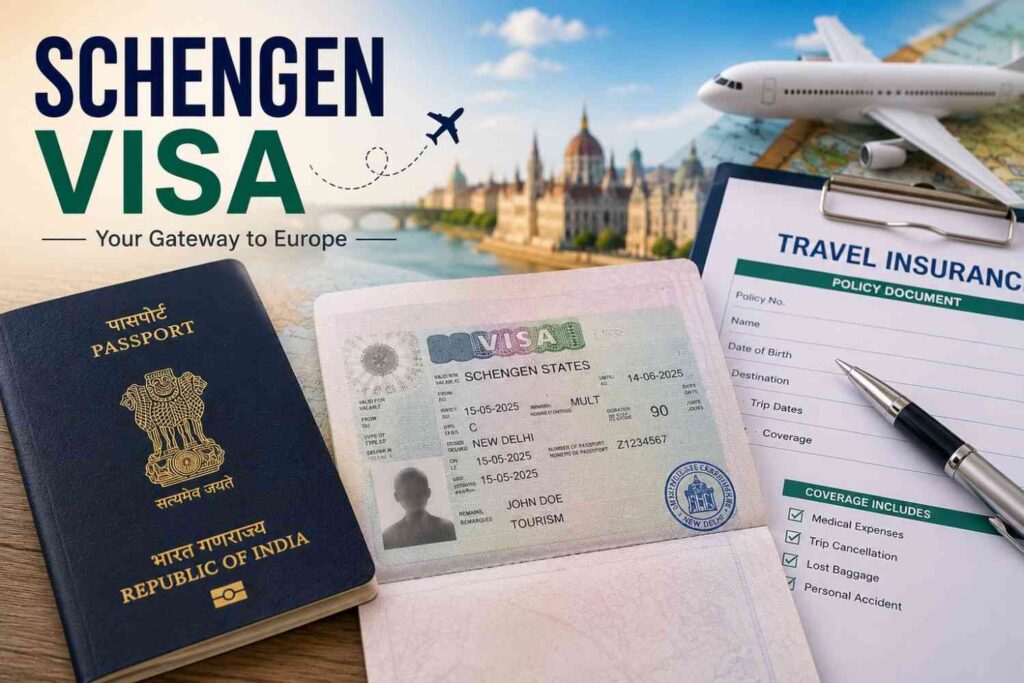
If you’re planning a Europe trip from India, one of the first expenses you’ll need to consider is the Schengen Visa. This single visa allows Indian travellers to visit 29 Schengen countries without applying for separate visas for each destination, making multi-country travel much easier.
Along with the visa, travel medical insurance is also mandatory. Your insurance policy must provide a minimum medical coverage of €30,000 and remain valid throughout your stay in the Schengen Area.
Estimated Schengen Visa Expenses
| Expense | Estimated Cost (INR) | Estimated Cost (€) |
| Schengen Visa Fee | ₹9,500–₹10,500 | €90 |
| VFS Service Charges | ₹2,000–₹3,000 | €20–€30 |
| Travel Medical Insurance | ₹1,000–₹2,000 | €10–€20 |
| Total Estimated Cost | ₹12,500–₹15,500 | €120–€140 |
Note: Visa fees and exchange rates may change over time. Always check the latest charges before submitting your application.
Documents Required for a Schengen Visa
To improve your chances of visa approval, keep the following documents ready:
- Valid passport (with sufficient validity)
- Recent passport-size photographs
- Confirmed or reserved flight itinerary
- Hotel or accommodation bookings
- Valid Schengen travel insurance
- Last 3–6 months’ bank statements
- Employment proof or business documents
- Cover letter explaining your travel plan
- Income Tax Returns (ITR), if applicable
Apply for your Schengen Visa from the country where you’ll be staying the longest. For a smooth travel experience, submit your application at least 3–4 weeks before your planned departure.
3. Accommodation Cost in Europe
Accommodation is the second-largest expense after flights, and it can significantly impact the total cost of your trip from India to Europe. Your expenses will depend on the country and city you visit, the time of year you travel, and the type of accommodation you choose.
Popular destinations like Switzerland, Paris, Amsterdam, and Venice are generally more expensive, while cities in Hungary, Poland, the Czech Republic, and Portugal offer much more affordable accommodation options.
During my Switzerland trip, I stayed in a hostel instead of a hotel because a few of my friends had already visited the country and recommended it. It turned out to be a great decision. Not only was it much cheaper than a hotel, but it was also clean, comfortable, and helped me save money for sightseeing.
Average Accommodation Cost Per Night
| Accommodation Type | Cost Per Night (INR) | Cost Per Night (€) |
| Hostel Dorm | ₹1,500–₹2,500 | €15–€25 |
| Budget Hotel (2★–3★) | ₹4,000–₹7,000 | €40–€70 |
| Mid-Range Hotel (3★–4★) | ₹6,000–₹12,000 | €60–€120 |
| Luxury Hotel (5★) | ₹20,000–₹45,000+ | €200–€450+ |
Money Saving Tips
- Stay slightly outside the city centre and use public transport.
- Book hotels 2–3 months in advance for better prices.
- Hostels are an excellent option for solo travellers and backpackers.
- If you’re travelling with family or a group, apartments or Airbnb can often be more economical than booking multiple hotel rooms.
4. Food & Daily Expenses in Europe

Food expenses are one of the easiest parts of your Europe travel budget to control because they depend entirely on your eating habits. If you choose local cafes, bakeries, supermarkets, and street food, you can comfortably manage your meals within ₹1,500 to ₹2,500 (€15–€25) per day. Travellers who prefer casual restaurants for most meals should budget around ₹3,000–₹6,000 (€30–€60) per day, while fine dining and premium restaurants can easily increase your food expenses to ₹12,000 (€120) or more per day.
Average Daily Food Cost
| Travel Style | Cost Per Day (INR) | Cost Per Day (€) |
| Budget Traveller | ₹1,500–₹2,500 | €15–€25 |
| Mid-Range Traveller | ₹3,000–₹6,000 | €30–€60 |
| Luxury Traveller | ₹12,000+ | €120+ |
How to Save Money on Food
- Buy breakfast from supermarkets like Lidl, Aldi, Carrefour, or Migros.
- Choose lunch specials or local cafes instead of tourist restaurants.
- Carry a reusable water bottle, as tap water is safe to drink in many European countries.
- If your hostel or apartment has a kitchen, cooking a few meals yourself can significantly reduce your food expenses.
5. Internal Transportation Cost in Europe
One of the biggest advantages of travelling in Europe is its well connected public transportation network. Trains, buses, metros, and budget airlines make it easy to travel between countries without spending a lot of money.
The total transportation cost depends on the number of countries you visit and the mode of travel you choose.
Average Transportation Cost
| Transport Type | Cost (INR) | Cost (€) |
| Local Metro/Bus Pass (Per Day) | ₹500–₹1,000 | €5–€10 |
| FlixBus (Between Cities) | ₹800–₹2,500 | €8–€25 |
| High Speed Train | ₹3,000–₹8,000 | €30–€80 |
| Budget Airlines | ₹3,000–₹10,000 | €30–€100 |
| Eurail Pass | ₹20,000–₹40,000 | €200–€400 |
6. Sightseeing & Activities Cost
Your sightseeing budget depends on the experiences you choose during your trip. While many attractions such as city squares, churches, parks, lakes, and walking tours are completely free, Europe’s most popular experiences usually require paid tickets. Entry to famous landmarks like the Eiffel Tower, Colosseum, and Louvre Museum generally costs €15–€35 (₹1,500–₹3,500) per person.
Activities such as a Venice Gondola Ride cost around €90–€120 (₹9,000–₹12,000) per gondola, while scenic mountain excursions like Jungfraujoch (Top of Europe) can cost €180–€250 (₹18,000–₹25,000). During my Switzerland trip in 2018, I visited Jungfraujoch (Top of Europe) using the early morning 6:30 AM train offer, which cost me around 135 Swiss francs.
Average Sightseeing Cost
| Activity | Cost (INR) | Cost (€) |
| Museums & Monuments | ₹800–₹2,500 | €8–€25 |
| River Cruise | ₹1,500–₹3,000 | €15–€30 |
| Guided City Tours | ₹2,000–₹5,000 | €20–€50 |
| Mountain Excursions (e.g., Jungfraujoch) | ₹18,000–₹25,000 | €180–€250 |
Tips: Book attraction tickets online in advance whenever possible. Many popular attractions offer discounted prices for early bookings and help you skip long ticket queues.
Europe Trip Cost by Duration
The total Europe trip cost from India depends largely on how many days you plan to stay. Longer trips naturally cost more, but your daily average expense often decreases because flights and visa charges remain almost the same.
Here’s a realistic estimate based on current 2026 travel costs.
Europe Trip Cost by Duration (Per Person)
| Trip Duration | Budget Trip | Mid-Range Trip | Luxury Trip |
| 7 Days | ₹95,000–₹1.3L (€950–€1,300) | ₹1.5L–₹2L (€1,500–€2,000) | ₹3L+ (€3,000+) |
| 10 Days | ₹1.2L–₹1.5L (€1,200–€1,500) | ₹2L–₹2.5L (€2,000–€2,500) | ₹4L+ (€4,000+) |
| 15 Days | ₹1.5L–₹2L (€1,500–€2,000) | ₹2.5L–₹3L (€2,500–€3,000) | ₹5L+ (€5,000+) |
| 1 Month | ₹2.8L–₹3.8L (€2,800–€3,800) | ₹4.5L–₹6L (€4,500–€6,000) | ₹8L+ (€8,000+) |
Recommendation: If it’s your first Europe trip, a 10-day itinerary covering 2–3 countries offers the best balance between sightseeing, travel time, and overall budget.
Europe Trip Cost For Solo Travelers, Couples, and Families
Your overall budget also depends on the number of travellers. While flights and visa costs remain almost the same per person, couples and families can often save on accommodation and transportation by sharing expenses.
Estimated Europe Trip Cost by Traveller Type
| Traveller Type | Estimated Cost (INR) | Estimated Cost (€) |
| Solo Traveller | ₹1.2L–₹2L | €1,200–€2,000 |
| Couple | ₹2.5L–₹4L | €2,500–€4,000 |
| Family (4 Members) | ₹5L–₹8L | €5,000–€8,000 |
Which Option Offers the Best Value?
- Solo Travellers: Hostels and public transport make Europe surprisingly affordable.
- Couples: Sharing hotel rooms reduces the accommodation cost per person.
- Families: Apartments and holiday rentals are often more economical than booking multiple hotel rooms.
Hidden Costs Most Indian Travellers Forget
Many travellers calculate flights, hotels, and visa fees but overlook several small expenses that can quietly increase the Europe trip cost from India. These hidden charges can easily add ₹10,000–₹30,000 (€100–€300) to your overall budget if you don’t plan for them.
Common Hidden Expenses
| Hidden Expense | Estimated Cost (INR) | Estimated Cost (€) |
| Tourist / City Tax | ₹200–₹1,000 per night | €2–€10 |
| Airport Transfers | ₹1,000–₹5,000 | €10–€50 |
| eSIM / Local SIM | ₹1,000–₹2,000 | €10–€20 |
| Forex Card & ATM Charges | ₹500–₹2,000 | €5–€20 |
| Shopping & Souvenirs | ₹5,000+ | €50+ |
| Extra Baggage Fees | ₹2,000–₹10,000 | €20–€100 |
| Emergency Expenses | ₹5,000–₹10,000 | €50–€100 |
Budget Tip
Keep an extra 10–15% of your total travel budget as a contingency fund. For example, if your planned Europe trip budget is ₹2 lakh, setting aside an additional ₹20,000–₹30,000 can help cover unexpected expenses without affecting your trip.
10 Smart Ways to Reduce Your Europe Trip Cost
Travelling to Europe doesn’t always have to be expensive. A few smart decisions before and during your trip can help you save thousands of rupees without compromising your experience.
1. Book Flights Early
International flights are usually cheaper when booked 2–4 months in advance, especially if you’re travelling from major Indian cities like Delhi or Mumbai.
2. Travel During the Shoulder Season
Consider visiting Europe in April–June or September–October. You’ll often find lower airfare, better hotel prices, and fewer crowds than during the peak summer season.
3. Choose Hostels or Apartments
If you’re travelling solo or with friends, hostels offer excellent value. Families and groups can often save more by booking apartments instead of multiple hotel rooms.
4. Use Public Transport
Europe’s metro, buses, and trains are reliable and far more economical than taxis or private transfers.
5. Compare Train and Bus Prices
Before booking, compare FlixBus with train fares. On many routes, buses are significantly cheaper and can help reduce your transportation costs.
6. Eat Like a Local
Instead of dining at tourist restaurants for every meal, try local cafés, bakeries, and supermarkets such as Lidl, Aldi, Carrefour, or Migros.
7. Book Attractions Online
Popular attractions often offer discounted online tickets and timed entry, helping you save both money and waiting time.
8. Pack Light
Many budget airlines charge extra for checked baggage. Travelling with cabin luggage can help you avoid unnecessary baggage fees.
9. Use a Forex Card
Paying with a forex card usually offers better exchange rates than converting cash at airports or tourist exchange counters.
10. Plan Your Itinerary Wisely
Instead of trying to visit too many countries in a short time, focus on 2–3 nearby destinations. You’ll spend less on transportation and enjoy a more relaxed travel experience.
Frequently Asked Questions
1. How much does a Europe trip cost from India?
Europe trip from India typically costs ₹1.2 lakh to ₹3 lakh (€1,200–€3,000) per person, depending on the trip duration, destinations, travel style, and season.
2. Is ₹2 lakh enough for a Europe trip?
Yes. A budget of ₹2 lakh is sufficient for a comfortable 10-day Europe trip covering 2–3 countries, including flights, visa, accommodation, food, transport, and sightseeing.
3. How much money should I carry for a trip to Europe?
Besides prepaid expenses, carrying around €300–€600 (₹30,000–₹60,000) for food, local transport, shopping, and emergencies is usually sufficient for a 10-day trip.
4. Which is the cheapest country to visit in Europe?
Hungary, Poland, the Czech Republic, Portugal, and Romania are among the most affordable European countries for Indian travellers due to their lower accommodation, food, and transportation costs.
5. Which is the most expensive country to visit in Europe?
Switzerland is one of Europe’s most expensive destinations, followed by Norway, Iceland, and Denmark, mainly because of higher hotel, transport, and activity costs.
6. What is the cheapest month to visit Europe from India?
February, March, November, and early December usually offer the cheapest flights and hotel prices. For a balance of pleasant weather and reasonable costs, April–June and September–October are ideal.
7. Is travel insurance mandatory for Europe?
Yes. Travel medical insurance is mandatory for a Schengen Visa and must provide at least €30,000 in medical coverage for the entire trip.
8. How much bank balance is required for a European tourist visa?
While there is no fixed requirement, maintaining a balance of around ₹2.5 lakh to ₹4 lakh generally strengthens your Schengen Visa application.
9. Should I book a Europe tour package or plan the trip myself?
A self-planned trip is usually more flexible and often cheaper, while tour packages are convenient for first-time travellers who prefer a hassle-free experience.
10. How can I reduce my Europe trip cost from India?
Book flights early, travel during the shoulder season, stay in hostels or apartments, use public transport, compare train and bus fares, and eat at local cafés or supermarkets to reduce your overall travel expenses.
Conclusion
Planning a Europe trip doesn’t have to be complicated when you know what to expect. Based on current travel costs, you should budget around ₹1.2 lakh–₹1.5 lakh (€1,200–€1,500) for a budget trip, ₹2 lakh–₹3 lakh (€2,000–€3,000) for a comfortable mid-range trip, and ₹4.5 lakh–₹7 lakh+ (€4,500–€7,000+) if you’re planning a luxury Europe vacation.
Keep in mind that your final Europe trip cost from India will depend on several factors, including your departure city, flight prices, hotel category, travel season, the number of countries you visit, sightseeing activities, and your overall travel style.

This blog is very helpful. I also want to plan solo trip to Europe. The information you shared about the Europe trip cost from India is detailed and informative. Thank you 🙏
Thank you for valuable information. The information is helpful for new indian travelers.